
Steel E-Motive aims for AV ride share
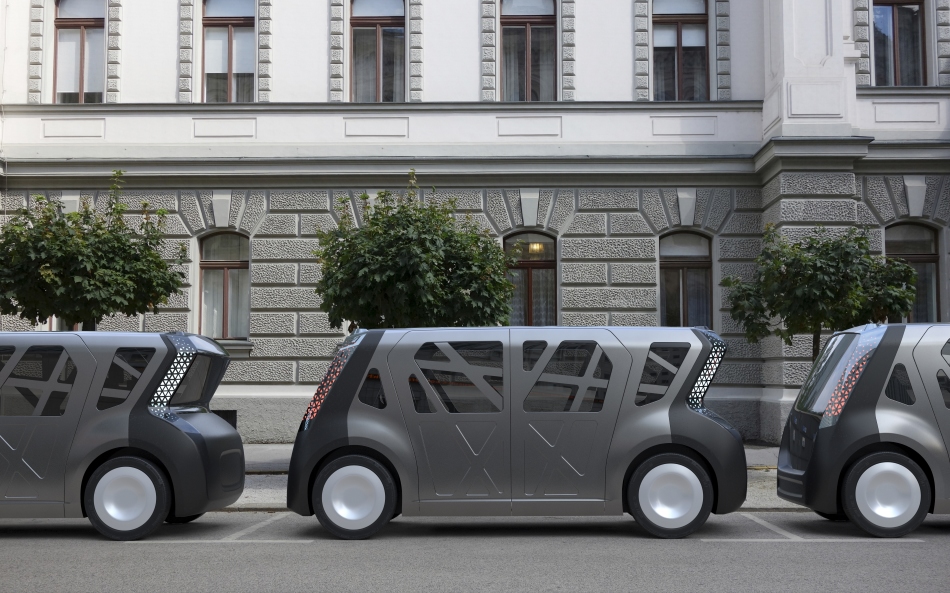
A global steel industry initiative aimed at developing the world’s first fully autonomous, electric vehicle body structure concept for ride sharing has been unveiled.
The project, called Steel E-Motive, is the culmination of a three-year research programme led by WorldAutoSteel and is in partnership with global engineering firm Ricardo.
Its objective was to create a fully autonomous ride sharing vehicle concept showcasing the strength and durability of steel with a critical focus on sustainability for reaching net zero emissions targets.
The results are safe, comfortable, and affordable body structures that support automakers in the continued development of Mobility as a Service (MaaS) ride sharing models, says WorldAutoSteel, the automotive group of the World Steel Association.
The project has the potential for 86% total lifecycle CO2 emissions reduction, providing a 282kg body structure and a 25% mass reduction over an expected reference vehicle of 374kg.
Advanced high-strength steel (AHSS) body structure and closures purpose fit for MaaS electric vehicles are included, while the AV is engineered to meet global high speed crash regulations.
Structural innovations are designed to provide safe, efficient and economical vehicle architectures, with intelligent battery packaging that is 37% lighter and 27% lower in cost than average reference battery pack structures, and applicable for current BEVs in development, the company explains.
WorldAutoSteel says the Steel E-Motive is manufacturable using global manufacturing and supply infrastructure at costs that can support profitable margins, both for the vehicle manufacturer and mobility service providers.
“The objective of Steel E-Motive was twofold,” says WorldAutoSteel director Cees ten Broek.
“One, as an industry, to create a solution that supports a sustainable, safe, and affordable future for urban mobility; and two, to showcase the role modern steel can play in making that future a reality.
“This project represents an important step forward for autonomous ride sharing and zero-emission transport, and truly demonstrates how working together as an industry yields important results.”
WorldAutoSteel worked closely with Ricardo, which managed the overall engineering design, testing, and development.
The programme highlights two virtual concepts designed for 2030-2035 deployment.
These are the SEM1, a four-passenger urban transport, and SEM2, a six-passenger extra-urban commuter, both designed for level five autonomy with no steering or pedal box.
Other specifications include compact size with short front and rear overhangs, an average body structure tensile strength of 1259 MPa, low step-in height and scissor doors encasing virtual B-pillar to achieve wide door access for ease of access, a flexible and open interior, battery agnostic (designed for maximum battery volume), adaptable to carry cargo in off-peak hours, and four-wheel steering for tight turning circles for navigating inner city roads.
A high volume production of more than 250,000 is planned.
“Our experts are working with global OEMs and Tier 1 suppliers to develop solutions for the future of clean and sustainable mobility,” says Ricardo chief engineer Neil McGregor.
“The impressive performance, safety, and lifecycle results of this programme are validation that steel is infinitely tunable, offering engineering and design flexibility that enables efficient and effective solutions.
“It has the potential to shape not only the future of Mobility as a Service, but how we design and utilise shared passenger transport in urban environments and city landscapes.”
WorldAutoSteel technical director George Coates says Steel E-Motive serves as a foundational blueprint for a wide range of applications.
“Using steel supports the use of existing manufacturing infrastructures, which helps to provide low ownership costs, critical for broad adoption.”
Click here for more information.
Join the conversation