
Audi EV sends up solar aircraft

New Zealand’s first solar-powered stratospheric aircraft will gather high-resolution aerial data for extreme weather events, environmental monitoring, and precision agriculture.
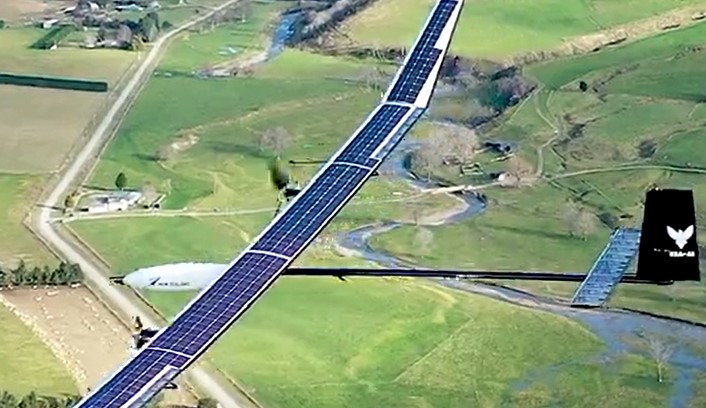
The Kea Atmos Mk 1 uncrewed aircraft, launched using an Audi e-tron Sportback S line, is designed for stratospheric flights with a 12.5 metre wingspan and weighing under 40kg, enabling it to fly higher than commercial airliners at up to 15,240 metres.
“It’s an exhilarating year for the company as we undertake a range of challenging flight tests on our journey to the stratosphere,” says Kea Aerospace chief executive Mark Rocket.
“It was an absolute thrill to show the Kea Atmos Mk1 aircraft to NASA administrator Bill Nelson and NASA deputy administrator Pamela Melroy last month and we look forward to working with a wide range of international aerospace participants.”
Christchurch-based Kea Aerospace has been building and flying a range of electric-powered aircraft and high-altitude balloons as part of its programme to build a global fleet of solar-powered uncrewed aircraft that will fly in the stratosphere for months.
Its X10 aircraft flew in February 2022 for 36 hours non-stop and proved perpetual flight capability at low altitudes.
Each aircraft will carry a suite of aerial imagery equipment offering game-changing advances for many industries, vastly improving the data available for activities including environmental monitoring, precision agriculture, disaster management and maritime awareness.
High altitude flights are planned this year to take-off from Tāwhaki on the Kaitorete Spit, about 50km south of Christchurch.
Archibalds Audi was contacted by a Kea Aerospace representative in January this year with a unique proposition.
Under the direction of Mark Rocket and Dr Philipp Sueltrop, Kea Aerospace is developing the Kea Atmos, and the company wanted Audi’s e-tron to help launch it.
After an earlier test flight, Audi marketing manager Mark Lincoln and Audi Centre manager Elliot Smyth met at Springfield Aerodrome, a grassy airstrip popular with glider enthusiasts and home of the Canterbury Gliding Club.
The Audi e-tron silently rolled along the runway to launch the Kea Atmos Mk 1.
Rocket says the solar-powered stratospheric aircraft is as lightweight as possible to fly in less than 10% of the air density at sea level, but at the same time tough enough to handle flying through the fast jet streams.
The Kea Atmos aims to enable swift response to disasters, develop smart cities by improving traffic flows, housing changes and managing green spaces; monitor weekly environmental changes, check forests for tree health and fire risks, enable precision agriculture and horticulture such as reducing water and fertiliser use, and monitor New Zealand’s maritime Exclusive Economic Zone to detect illegal fishing boats and other vessels.

Join the conversation