
AVs could impact airlines

Autonomous vehicles (AVs) will revolutionise land transport, but US Embry-Riddle Aeronautical University researchers predict a bigger AV impact on airlines.
Most people take a flight if their trip is long, rather than driving eight to 10 hours, but authors Stephen Rice and Scott Winter expect that could change if travellers can relax in an AV while it takes them to their destination.
“Our research has revealed just how much people’s travel preferences could shift and found a new potential challenge to the airline industry,” the two say.
They showed people hypothetical trips of different lengths and asked whether they would rather drive themselves, take a flight, or ride in a self-driving car – the latter popular compared to driving.
The longer the trip, the more likely participants chose air travel, the research shows.
But riding in an AV became more attractive when participants were told they would need to rent a car once they arrived at their destination and wouldn’t have to check-in and go through airport security procedures. The AV would take them directly to where they wanted to go.

“These changes could substantially change the aviation industry, with airlines ordering fewer airplanes from manufacturers, airports seeing fewer daily flights and lower revenue from parking lots, and even airport hotels hosting fewer guests,” Rice and Winter say.
“The future of driverless cars is appealing to consumers – which means the future of commercial flight is in danger.”
The authors concede they didn’t consider how the cost of each mode of transportation might affect consumers’ choices, which could make AVs less of a threat to airlines, Consumer Affairs reports.
AVs are unlikely to be privately owned because of their expense, so driverless vehicle advocates expect them to be in ride-sharing fleets, operated by the likes of Uber, Lyft, and many others.
For about a 10-hour drive a flight would take about two hours, assuming no delays, the authors say.
“Add to that the drive to the airport, checking in, the security line and waiting at the gate,” they add.
Upon arrival it may take another 30 minutes to pick up checked bags and find a rental car – and even more time to drive to the destination.
“The average person would estimate a total travel time of four to five hours. Most people would choose to fly instead of driving themselves.
“On short trips, with a five-hour drive, two-thirds of people would rather drive themselves. “That didn’t change much when they were offered a self-driving car, unless they were told they would need a car in their destination city. Then nearly three-quarters of people preferred a self-driving car to flying.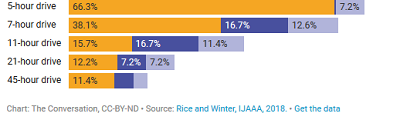
“As trips got longer, people were increasingly likely to prefer flying, but self-driving cars were still a compelling option. On the longest trips we asked about, with a 45-hour drive, only about one in 10 people preferred driving themselves – but that changed to one in six when the option was to have a car drive itself.”
Losing even one in 10 customers would substantially reduce airlines’ revenue, the authors say.
And people might split travel between an AV and flying, which could further reduce it, they add.

Join the conversation