
BMW and JLR collaborate on EVs
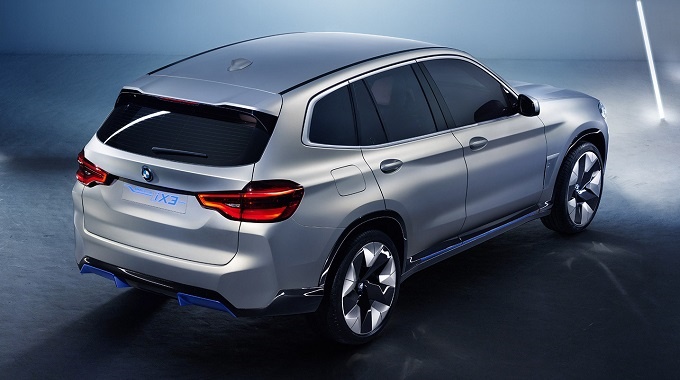
BMW Group and Jaguar Land Rover (JLR) will co-operate on next-generation electrification technology, beginning with electric drive units (EDUs).
Announcing the move, BMW Group says it will work with India’s Tata Motors owned JLR on BMW’s electric drive (eDrive) technology expected to start next year with the BMW iX3 Sports Activity Vehicle.
BMW brings experience in developing and producing several generations of electric drive units in-house since it launched the pioneering BMW i3 in 2013. JLR has produced the electric Jaguar I-Pace and plug-in hybrid models (PHEVs).
Cooperation between car manufacturers to share know-how and resources is important as the automotive industry tackles the significant technological challenges of autonomous driving, connectivity, electrification and services (ACES), BMW says.
The BMW Group’s electrified technology features an electric motor, transmission and power electronics in one housing, the motor not requiring rare earth elements and so enabling the group to reduce its dependence on their availability.
“Together, we have the opportunity to cater more effectively for customer needs by shortening development time and bringing vehicles and state-of-the-art technologies more rapidly to market,” BMW AG development management board member Klaus Frohlich says.
JLR engineering director Nick Rogers says the pace of change and consumer interest in electrified vehicles is gathering real momentum, so it’s essential to work across industry to advance the technologies required.
The cooperation allows both to take advantage of cost efficiencies arising from shared development and production planning costs as well as economies of scale from joint purchasing.
A joint team of BMW Group and Jaguar Land Rover experts in Munich will be tasked with further developing the fifth-generation power units with production of the electric drivetrains to be undertaken by each partner in their own manufacturing facilities.
This follows Fiat Chrysler Automobiles (FCA) NV’s recent intention to merge with Renault to establish the world’s third-biggest automotive manufacturer, the alliance including Nissan and Mitsubishi.
Volkswagen and Ford are also cooperating on projects, which could evolve to autonomous vehicles (AVs) or sharing production platforms.

Join the conversation