
Bosch to collaborate with fuel-cell expert Ceres Power
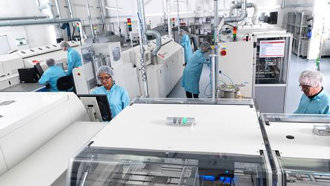
Bosch is proceeding with fuel-cell technology development for potential new power systems.
With United Kingdom-based technology specialist Ceres Power, Bosch wants to develop the next stage of solid-oxide fuel-cell (SOFC) technology which will help charge electric vehicles.
Bosch also plans to take a 4% equity stake in Ceres Power. The two companies have just signed a collaboration and license agreement for the further development of technology, and establishment of small-volume production operations at Bosch, as well as a share purchase agreement.
Ceres Power wants to commercialise its technology through mass production with partners, and to use this technology for grid-based and distributed power generation. The intention is that SOFC systems will be used in cities, factories, and data centres, and also as a power supply for charging points for EVs.
“Bosch believes that the highly efficient fuel cell, with its very low emissions, has an important role to play in energy systems’ security of supply and flexibility,” Bosch management board member Stefan Hartung says.
“Fuel-cell technology will bring the move to alternative energy a step closer, and we will be working on this with our development partner Ceres Power.”
By 2050, it is expected that more than six billion people worldwide – 70% of the global population – will live in cities. Even now, the world’s metropolises account for 75% of the energy consumed worldwide. By 2035, global energy consumption will have increased 30%. In the future, meeting this increased demand for electricity solely with large, centralised power stations will not be possible.
“By combining Ceres’ unique steel cell technology with Bosch’s engineering, manufacturing, and supply chain strength we will establish a strong partnership that can make our technology even more competitive and prepare it for potential mass production,” Ceres Power chief executive officer Phil Caldwell says.
SOFC technology uses an electrochemical reaction in the fuel cell stack to convert fuel such as natural gas or hydrogen into electricity. The environmental benefit is considerable, with much lower emissions than from power stations that use a combustion process.
The vision is to have small power stations throughout cities, as well as in industrial areas. Because these standardised plants are highly flexible, they will be able to cover peak demand better, as well as faster, than conventional plants.
The aim is for one SOFC module to generate 10kW of electrical power. Where more electricity is needed, any number of modules with the same output can simply be interconnected.
Using fuel cells, considerable power can be generated locally and highly efficiently. In this way, discrete areas can be created that are largely independent of centralised power supplies.


Join the conversation