
More plugs beat more power: charging data challenges how NZ’s network was built
Kempower data shows charging sites with more plugs are used far more than sites with more power, a finding that matters for New Zealand's network of single and dual-plug sites.

Public charging sites with more plugs get used more, and the number of plugs predicts a site’s utilisation three times better than how much power is installed, according to real-world data from charging hardware maker Kempower.
The Finnish company’s white paper, drawn from North American sites running its ChargEye management software, found a correlation of 0.63 between utilisation and plug count, against just 0.22 between utilisation and total installed power. A site with eight plugs delivered 128,342kWh over the study period, more than double the 61,453kWh from a four-plug site.
Because operators earn from kilowatt-hours delivered rather than charging speed, Kempower says more plugs translate directly into higher revenue potential. Sites are typically designed around a theoretical peak demand that is rarely sustained, so the company argues capacity should be shared dynamically across more plugs rather than provisioned at full power per outlet. Sites using distributed charging in its data achieved 83% higher utilisation than fixed-power sites.
“Public charging is increasingly becoming an infrastructure utilisation challenge, not simply a power deployment challenge,” says Jed Routh, Kempower’s vice president for markets and products in North America. “Giving more vehicles access to charging and dynamically distributing available power can help operators get more from their charging infrastructure.”
The New Zealand picture
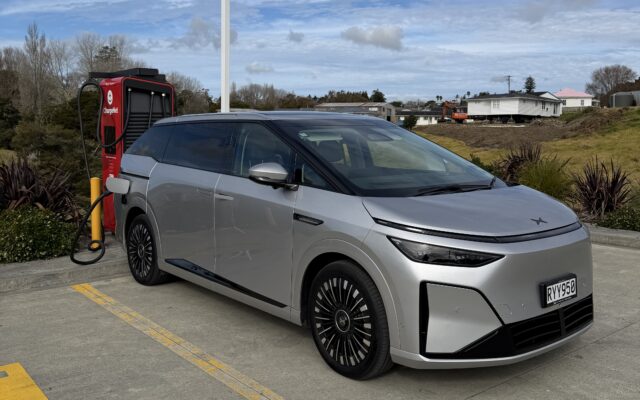
The findings land on a network built the other way. New Zealand’s public charging grew from single and dual-plug 50kW sites spaced along state highways, a model that suited early adopter numbers and long distances but leaves drivers queueing when two cars arrive at once. The Government’s target of 10,000 public charge points by 2030 counts plugs, which aligns with Kempower’s conclusion, and the newer generation of local sites is following the multi-bay hub pattern. ChargeNet’s larger hubs at Bombay and Tauranga Crossing, along with its Kaiwaka site, where the XPeng X9 set the national charging record, put multiple high-power plugs on one forecourt, and Meridian’s network, now past 500 charge points, is building toward 1,000.
The data was collected in North America, and Kempower has a commercial interest in selling the dynamic power-sharing hardware it recommends. The utilisation gap it measures, though, is a question New Zealand operators can test against their own sites.


Join the conversation