
Drones for predator control
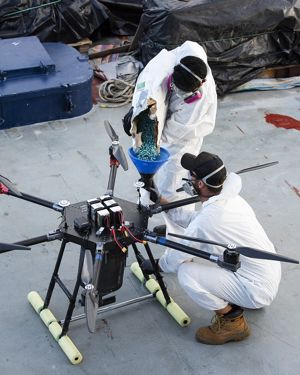
Nearly $800,000 is being invested in testing a predator control drone for the Department of Conservation (DOC).
“Drones have the potential to be a game-changer – in helping remove pests from remote offshore islands, respond to pest incursions and suppress predators on mainland New Zealand. They may become another of the broad range of tools available to DOC and landholders to manage predators and restore New Zealand’s unique natural landscapes,” conservation minister Eugenie Sage says.
She says new tools and technologies are needed for predator control in a way that is humane, safe, effective and affordable.
Predator control drones have not previously been used in New Zealand.
Kiwi start-up Environment & Conservation Technologies (ECT) will test how the drone performs in a series of field trials, using a new light-weight bait spreader to apply non-toxic cereal baits over areas between 600ha to 2000ha.
DOC’s Tools to Market programme will invest $790,000 in the drone proposal.
“It will look at the feasibility and costs of drone use for predator control, as well as potential savings in carbon emissions from current aerial methods,” Sage says.
“This Government is supporting innovative Kiwi companies such as ECT to develop the technology of the future to bring back our native wildlife.”
DOC got 56 applications after calling for registrations of interest in the Tools to Market project last year.
The Budge 2018 committed $700,000 annually for four years to Tools to Market to improve predator control tools as part of Predator Free 2050 with five projects funded.
ECT last year used drones to remove rats from two islands in the Galapagos working with international Island Conservation. ECT is also redesigning the Spitfire toxin delivery device to control stoats and possums.
The project involves three trials, due for completion in 2022, testing drone capability to apply cereal bait and assess feasibility and costs.
Using drones will not mean more 1080 drops, determined by the needs of native species, predator numbers, environmental conditions such as forest masts and budgets. Any use of a drone to apply 1080 cereal bait would need to meet the same rigorous standards under current regulations as helicopter application, DOC says.



Join the conversation