
EV demand could see battery shortages: IDTechEx
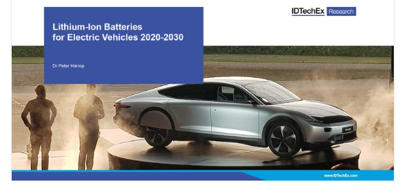 Lithium batteries will be dominant during the coming decade but their chemistry will change.
Greater energy density will be sought along with reductions in cost and flammability, IDTechEx reports, expecting the batteries’ biggest application to be EVs – in 101 categories.
In Lithium-Ion Batteries for Electric Vehicles 2020-2030, IDTechEx warns that lithium-ion battery shortages can be caused by shortages of lithium, cobalt and nickel despite the current glut.
This is because EV demand is rising so fast, with pure EVs particularly important as they take over 80% of the EV battery demand, it says.
Cars will be the largest users in market value followed by trucks and buses, leading a trend to bigger batteries in the mix.
Electric Vehicles in Construction, Agriculture and Mining 2019-2029 analyses another rapidly emerging user of large batteries, some around the 1MWh level also seen in some ships and manned electric aircraft. Other IDTechEx reports cover marine and airborne EVs.
For lithium batteries, those metal shortages are a maybe, but shortage of production capacity is more likely despite new facilities being committed all the time.
Solid-State and Polymer Batteries 2019-2029: Technology, Patents, Forecasts describes how reduced flammability and greater energy density will be seen from an increasing minority of lithium batteries after 2025. Some even avoid nickel and cobalt. Many will be made by the adaptation of existing battery factories.
“Around 18% of the US$3 trillion level EV market in 2030 would be lithium batteries in an unconstrained scenario,” IDTechEx chair Dr Peter Harrop says.
“The improved performance and cost from solid-state and polymer batteries can only boost demand. The incumbent manufacturers are rapidly increasing output of lithium-ion batteries in the meantime,” he says.
“Impressive newcomers to battery cell making such as Tesla and Dyson are investing heavily to launch next-generation cells of their own technology for their own EVs. The Toyota-Panasonic advanced battery joint venture is particularly formidable.“
What with low silicon then high silicon anodes and other changes, some manufacturers may be cutting corners in rollout, leading to future recall of bad product, IDTechEx says.
“That will not help output. The lithium battery is an excellent business to be in, but all is not plain sailing.”

Join the conversation