
EV surge may lead to power drain

Will a surge in EV charging blow up the local transformer?
Unlikely, but electricity companies which own them are being advised to take measures to ensure they don’t and can handle the expected load increase, especially from home EV charging.
That was a key message from a session on EV charging at the Electricity Engineers’ Association (EEA) Conference in Auckland on June 26 attended by more than 1000 delegates and including about 20 trade displays.

Transformers lower the voltage before the power gets into homes. Any unlikely transformer explosion or fire caused by excess EV charging would negatively impact on EV uptake, the session heard.
Explaining the processes and analysing data, speakers Dr Allan Miller of Allan Miller Consulting and Dr Graeme Ancell of Ancell Consulting both see smart charging providing a solution.
Rather than spend considerable money – perhaps unnecessarily – on upgrading transformers, the two suggest better data capture and more consumer use details would help determine capacity and when work is needed.
Smart charging would allow EVs to charge up when power is cheapest, usually off-peak, and help spread the load.
Other factors affecting the situation are likely to involve transport as a service (TaaS) which encourages people to ‘rent’ vehicles such as EVs rather than own them, reducing impact on the grid. The TaaS providers would probably have their own chargers as well.
Ancell says one difficulty in data gathering for power demand forecasting is that EV owners may charge up at home, work or at a destination such as the supermarket.
The ABB’s Dr Bhaba Das says his company’s TXpert digital distribution transformer collects relevant data from sensors such as temperature, moisture, hydrogen and oil levels which can be analysed to determine how the transformer is coping and whether changes are needed.
He says such digitalisation, likely to evolve to a cloud platform, using wifi can quickly determine what’s needed in the event of a fault and whether an upgrade is needed, saving on costs.
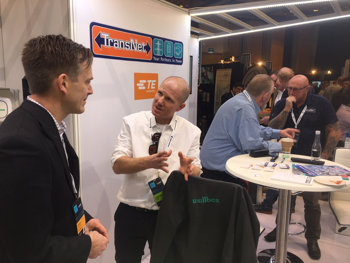
Dyson Gentle of PowerNet, left, and Glenn Inkster of TransNet NZ.
“If a fault is detected it would trigger an automatic reaction,” he says.
Miller and Ancell both see EVs having a bigger impact on electricity supply within the next few years as more models become available and emission restrictions increase.
But they don’t expect a major problem developing in the network as a result of the rapid EV increase forecast, although much could depend on the response from the companies involved.
The EEA Conference and expo at the SkyCity Convention Centre finishes on June 27.


Join the conversation