
Hitting the beach: Can you do regular long distances in an EV?
This story first appeared in the July issue of EVTalk – CLICK HERE to download the magazine FREE
 It is difficult to argue electric vehicles are not ideal for short city hops and commutes. But what about those people who live a little further away from work – or have holiday homes they need to travel to on a regular basis?
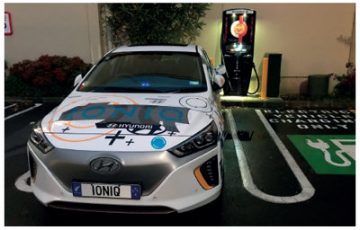
I have been forced to find out how they feel. A recent relocation to Mangawhai Heads, with EVtalk headquarters being on the Auckland waterfront stretched my commute from 3km to 103km. It also tied in with being scheduled to drive a series of plug-ins. First was a Hyundai Ioniq, then a BMW 225xe. A Tesla Model X was supposed to be part of the order, though a buyer liked it so much they took it home – read our review of this car in our next magazine.
Infrastructure everywhere
Northland is well placed for charging infrastructure, and the run to Mangawhai requires you to drive no more than 30km without passing a 50kWh fast charger. Near our city office are stations supplied by both ChargeNet and Vector.
 Close to the motorway at Silverdale is a Vector location, while Warkworth has a ChargeNet Veefil handily stationed at the New World Supermarket. Vector is putting a unit at the BP on State Highway 1 in the village. Wellsford has destination charging, while a detour to Kaiwaka gives access to yet another ChargeNet fast charger.
Mangawhai does not have fast DC charging, though it has something handy for the Ioniq. Roadside in the village is both type-1 charging and a 22kW AC type-2 option. We also charged the cars as much as possible at home using their portable 8-amp leads.
We wanted to avoid too many unplanned stops to charge, especially since our trip to the city started at 5am. It may be the winterless north, but it is cold and wet at this time of year.
200km-range? Sort of
Our first attempt at the trip was in the Ioniq. We are big fans of this car, particularly in Elite form. For a highway run the addition of adaptive cruise control, lane keeping assist and comfortable leather seats and steering wheel with electric heating is very welcome. It is not bad to drive either, with excellent grip through corners from the low rolling resistance tyres. It does feel heavy, but not so much that it is uncomfortable on twisty roads.
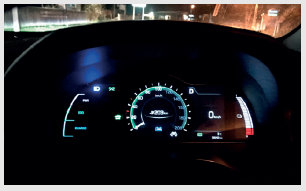
Hyundai claims the Ioniq can do 200km, and the run north showed this is possible. We left the city with just under 200km of range showing on the gauge. A typical drive north on a warmish afternoon with no air conditioning running left us with just under 100km available. This is dead on the distance travelled and in line with Hyundai’s claims. It is also important to note the car can be refilled on the 8-amp charger overnight, with a little time left for some wonderful scheduled pre-warming.
The next morning did not go so well. This time my partner was on-board, and she wanted heat, lots of it. By the time we arrived in Auckland 200km of range had dropped to less than 50km. Still, the run was doable, and a 20-minute charge to 90% got us home again, but again with less than 50km of range available even with some more clever use of the heating system.
At this level, the 8-amp lead could not fully charge the car overnight. ChargeNet came to the rescue a few days into this cycle. A quick shop at New World in Warkworth lifted the charge enough so a full battery could be achieved at home.
Can the Hyundai Ioniq handle a 100km commute? Most definitely, and for every day of the week, not just weekends. All that is required is something most owners of EVs acquire at some point – a hard-wired, higher output charger for their home. A 15-amp system would have topped up the car sufficiently every night.
Hybrid intelligence
Car makers would suggest this is exactly the kind of job plug-in hybrids are made for. Say you live in the city suburbs but have a bach out of town. You can travel to work daily gas free – as our staff member driving the BMW 225xe has been doing almost petrol-free from Hillsborough – and when you head out of town the petrol engine takes over to get you there in one hit.
We do not disagree. We charged the 225xe at the type 1 chargers in Auckland’s downtown parking building and headed north in ‘EcoPro’ mode, letting the car decide when and where to use its power. If you set your final destination in the navigation system the car will best manage its available battery for the best efficiency. BMW NZ tells us local maps don’t have the detail for it to work as well as in Europe, but we found it rather accurate.Average fuel consumption was 5.4-litres per 100km. This is a decent result for a car of this size in conditions like this.
We experimented with the car’s systems, and one day set it to ‘Save’ mode to keep the battery full until we were just under 40km – the 225’s electric range – out from the city and then switched it to electric mode for the cruise into town. It made it with range to spare, but the fuel consumption was higher at 6-litres per 100km. It appears the hybrid is smarter than we are at saving energy.
Can the BMW 225xe handle a 100km commute? It can, though this is best for a particular buyer, someone who has a short city commute and occasionally travels long distances. It is good for the moment, though as charging infrastructure improves battery-only appears to be the way to go.


Join the conversation