
Key steps towards a hydrogen society
Three key steps to accelerate the transition to a hydrogen society were outlined during the Hydrogen Council’s third annual chief executives meeting in Paris by Hyundai Motor Group executive vice chairman and Hydrogen Council co-chair Euisun Chung.
While saying there’s “no shortcut to creating a future hydrogen society,” Chung says it’s essential to establish detailed implementation plans for respective sectors and different stages of the industry’s development.
To achieve this, he recommends reducing cost through technological innovation, creating a comprehensive safety management system and fostering broad acceptance of hydrogen.
As a first step, Chung suggests achieving cost reductions through technological innovation in all sectors of the hydrogen industry
To fully tap hydrogen’s potential as the ultimate alternative to fossil fuel, new creative ways of lowering cost in a shorter time span must be sought across the entire value chain – including production, storage, distribution and application, he says.
Chung also notes the need to establish a comprehensive safety management system throughout the entire hydrogen value chain to convince the public it’s safe.

He says governments and policymakers should advocate the inclusive benefits of hydrogen and promote the vision of a hydrogen society and the opportunities it will create.
“We deserve to be proud of our achievements so far, only three years after the Hydrogen Council was born,” Chung says. “We’ll take stock of our progress, and reflect on our assessments to forge our strategy for this year and beyond.”
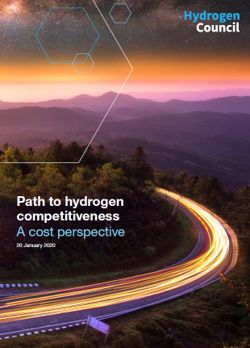
Hydrogen cost is expected to fall sharply within the next decade, sooner than expected, the Hydrogen Council says in a new report, Path to Hydrogen Competitiveness: A Cost Perspective.
As production, distribution and equipment manufacturing scaling up continues, cost is projected to decrease by up to 50% by 2030 for a wide range of applications, making hydrogen financially competitive with other low-carbon alternatives and, in some cases, even conventional options.
Commissioned by the Hydrogen Council and delivered by McKinsey & Company in partnership with E4tech, the report analyses 25,000 data points from 30 companies representing the entire hydrogen value chain across the US, Europe, Japan/Korea and China.
An independent advisory group comprising industry experts also reviewed the data.
The report shows significant cost reductions expected across more than 20 different hydrogen applications, such as long-distance and heavy-duty transportation, industrial heating, and balancing of the power system, comprising about 15% of global energy consumption.
It suggests this is possible through dramatically falling costs of renewable electricity generation, growing utilisation of distribution system infrastructure, and scaling up of manufacturing.
Supporting policies will be needed together with investment support of around US$70 billion in the lead up to 2030.
While this figure is sizable, it accounts for less than 5% of annual global spending on energy, the report adds.
“A clean energy future with hydrogen is closer than we think, because the industry has been working hard on addressing remaining challenges,” Hydrogen Council co-chair and Air Liquide chairman and chief executive Benoit Potier says.
“2020 marks the beginning of a new era for energy: As the potential for hydrogen to become part of our global energy system becomes a reality, we can expect fewer emissions and improved security and flexibility. This announces the decade of hydrogen.”
Chung says the Hydrogen Council hopes the report’s findings will not only increase public awareness about the potential of hydrogen to power everyday lives, “but also debunk the myth that a hydrogen economy is unattainable due to cost”.
“If we are to reach our global climate goals by mid-century and reap the benefits of hydrogen, now is the time to act.”
More than 80 chief executives and other senior executives were at the Hydrogen Council’s annual meeting, held alongside France president Emmanuel Macron’s ‘Choose France! Summit’ and the World Economic Forum in Davos.
Visit here
for more information.

Join the conversation