
Lotus launches EV charging
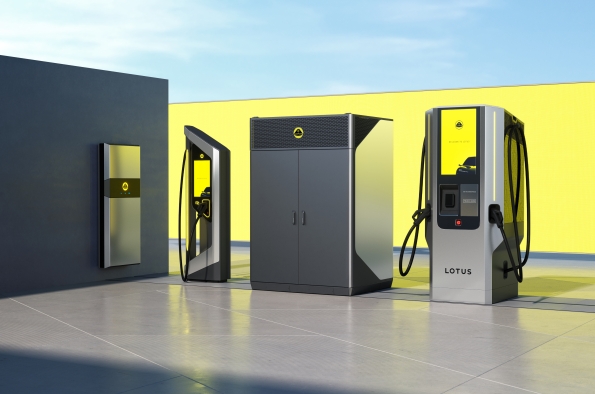
Lotus is developing its own range of EV charging solutions on the way to becoming all-electric by 2028.
Available now in China, Lotus EV charging is expected to be rolled out in most European countries and the Middle East in Q2 2024.
Lotus launched its EV charging solutions – including an ultra-fast 450kW DC charger, power cabinet and a modular unit for charging up to four vehicles at once – at the London EV Show, November 28-30.
Nearly 80% of people cite the lack of charging infrastructure as a primary reason for not buying an EV in a survey by the Energy Policy Institute.
The new suite of Lotus EV charging solutions designed for businesses include a liquid-cooled all-in-one DC charging offering up to 450kW (adding up to 142km range in about five minutes to the Lotus Eletre R), a liquid-cooled power cabinet of up to 480kW, and a liquid-cooled charging unit (600Amp) which, when used with the power cabinet, can charge up to four vehicles at once.
Lotus says it has futureproofed its fast charging offering for when the infrastructure becomes readily available, adding that customers will be able to easily upgrade to this power output without additional hardware costs once in-market service providers rollout grid upgrades.
“We want to make it easier than ever to own an electric vehicle and with our latest offerings, Lotus is able to provide customers with the confidence to access easy, fast, and efficient charging,” says Lotus Group chief commercial officer Mike Johnstone.
In 2018, Lotus announced its Vision80 strategy and plans to transform the brand from a British sports car maker to an all-electric global luxury technology brand by 2028.
The company launched its first electric hyper-SUV Eletre in 2022, with customer deliveries across UK, Europe and China this year.
Lotus recently launched Emeya, its next-generation electric hyper-GT, and the brand says it will continue to expand its range of premium EVs.
Its orderbook exceeds 19,000 vehicles for its Emira sports car and Eletre hyper-SUV.
The company has ramped up production this year.
Join the conversation