
Nissan Leaf to help stabilise German grid
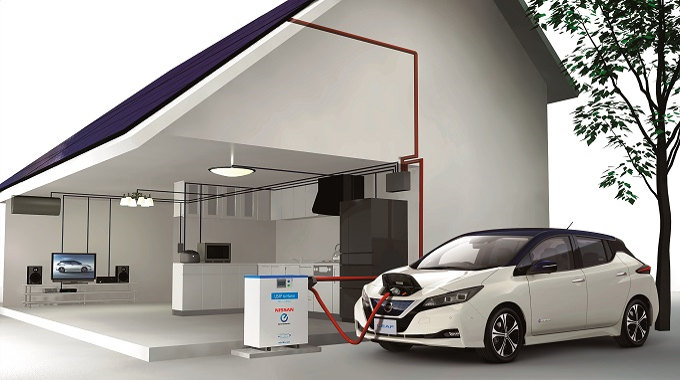
The Nissan Leaf can now be used as a reserve backup for the German electricity grid.
With the Leaf prequalifying as a large power station under the German Transmission System Operators’ (TSO) guidelines, it’s being hailed as a breakthrough in establishing vehicle-to-grid (V2G) technology there.
The project partners – technology company The Mobility House, energy supplier Enervie and transmission system operator Amprion – have qualified the Leaf for the regulatory requirements needed for primary power regulation.
“We strongly believe in an emission-free future,” Nissan Center Europe vice president and managing director Guillaume Pelletreau says.
“Accordingly, we are also very proud that the Nissan Leaf has, as the first electric car ever, been approved as suitable for stabilising grid frequencies.
“Leaf batteries could make an important contribution to energy transition in Germany and a sustainable future.”
New and innovative solutions for stabilising the electricity grid are necessary to transition to decentralised energy generation from renewable sources in Germany.
The increasing use of renewable energy leads to fluctuations in the grid, which must be initially balanced by primary regulation, able to prevent impending power cuts at a second’s notice.
Electric cars like the Leaf, with integrated bidirectional charging technology, could play an important part in stabilising the electricity grid.
With its Chademo charging connector, the Leaf is able not only to extract power from the grid and store it in its traction battery but, if necessary, can also feed power back.
The bidirectional chargeability of Nissan’s electric car is the foundation for its integration in the pilot project at the Enervie site in Hagen, Germany.
In combination with innovative, intelligent charging and energy management technology from The Mobility House, the charging and discharging processes can be controlled and monitored.

Join the conversation