
Nissan’s EV test car a future indictor
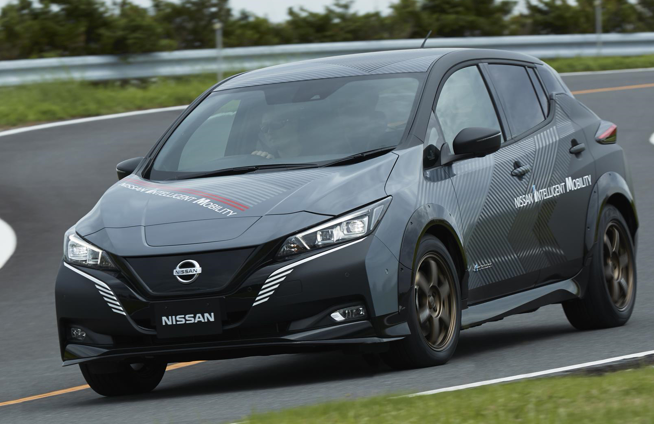
Nissan has unleashed a high-power, twin-motor all-wheel-control test car with new technologies being developed for its next generation EVs.
Based on the Nissan Leaf e+, the test EV features an enhanced all-wheel drive system powered by front and rear high-power motors integrated with Nissan-developed chassis control technology – the electric-drive all-wheel-control system designed to take Nissan’s EV performance to a new level.
“Soon, Nissan will launch a next-generation EV that will be a true breakthrough,” Nissan research and advanced engineering senior vice president Takao Asami says.
“The new electric-drive four-wheel-control technology now being developed integrates Nissan’s electric propulsion and 4WD control technologies with our chassis control technology to achieve a huge leap in acceleration, cornering and braking performance, on par with the latest sports cars.”
Using separate front and rear electric motors, the powertrain generates 227kW maximum output and 680Nm of torque.
This output is complemented by the ultra-high-precision motor control provided by Nissan’s advanced EV technology which offers highly responsive yet uncommonly smooth acceleration, the company says.
Drivers can benefit from the all-wheel-control system on nearly any road condition, heightening driving performance and confidence, it adds.
Vehicle pitch and dive are minimised by adding regenerative rear motor braking to the usual front motor regenerative braking.
When slowing down on city streets, for example, this helps keep passengers from being shaken back and forth, reducing the potential for motion sickness and related discomfort.
In addition to optimising front and rear torque allocation, the system applies independent brake control at each of the four wheels to maximise the cornering force generated by each tyre.
The test car is also fitted with over-fenders and rally-style wheels.
Inside, the test car sports a 12.3-inch display centred in the instrument panel that reports, in real-time, information on the vehicle control technology via a polished graphic interface.
With the custom display, the driver can better understand vehicle movement, and judge the all-wheel-control technology’s performance at a glance.
When cornering on snow-covered roads, for example, the vehicle can faithfully trace the driver’s intended line.

Join the conversation