
Students’ e-trike wins national award
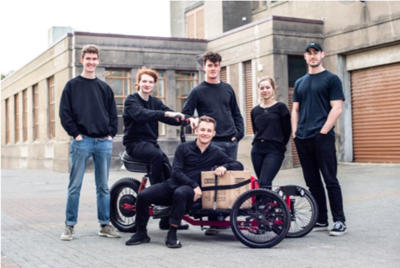
An electric cargo trike designed by six Wellington students has won New Zealand’s national James Dyson Award.
The e-trike aims to solve problems faced in New Zealand cities, including environmental issues, efficient package delivery, and safety for couriers.
Traditional delivery vehicles cost companies and consumers – fees to cover road taxes, petrol, parking permits and time and lost productivity, designer Daniel Shorrock says.
 The industrial design team who created the e-trike wanted a safe, sustainable option for the delivery of parcels, and identified a gap in the market for sustainable package delivery alternatives.
“The last few kilometres are the least efficient in the delivery process, and we wanted to create a safe vehicle that addresses that problem and solves it,” Shorrock says.
The team was inspired by sports bikes and the increasing trend of Kiwis moving to more sustainable vehicles.
Shorrock says there were four main prototypes before getting to the final product.
“It can stop faster, corner harder, and provide more stability than a normal cargo bike,” Shorrock adds. “Easily interchangeable batteries mean delivery downtime is kept to a minimum by allowing it to run all day with only short breaks needed to swap the batteries out.”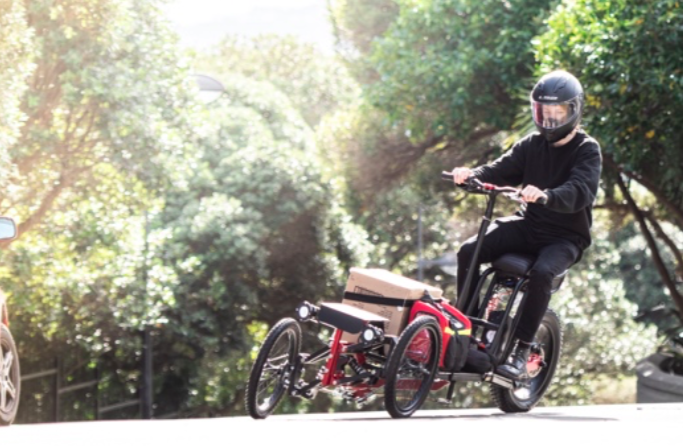
James Dyson Award judge Sir Ray Avery says this is an urban ute and could become a transportation game-changer from a global perspective.
“The electric cargo trike has a place in every developing country and is a great example of Kiwi applied technology.”
The designers will receive NZ$3500 and the winning entry advances to the international stage of the award, where student entries from 27 nations will be judged by Dyson engineers.
The top 20 projects will be judged by James Dyson who selects the international winner.

Join the conversation