
Peak car has big opportunities: IDTechEx
The global tipping point for sustainable mobility in the world’s largest cities will be in 2030.
That’s according to Kantar’s Mobility Futures study predicting private car journeys in the world’s largest cities will decrease 10% by 2030 due to the sharing economy, multi-modality, autonomous vehicles and ageing population.
The Kantar report confirms the prior IDTechEx study, IDTechEx chairman Dr Peter Harrop says, and also shows increased public transport use, cycling and walking.
Kantar surveyed 20,000 citizens across 31 cities and the report distilled panel discussions with 53 mobility experts from 14 countries, finding 49% of city trips become greener vs 46% for cars (now 51%). Taxi, ride sharing/ride-hailing trips, and other modes become 5%.
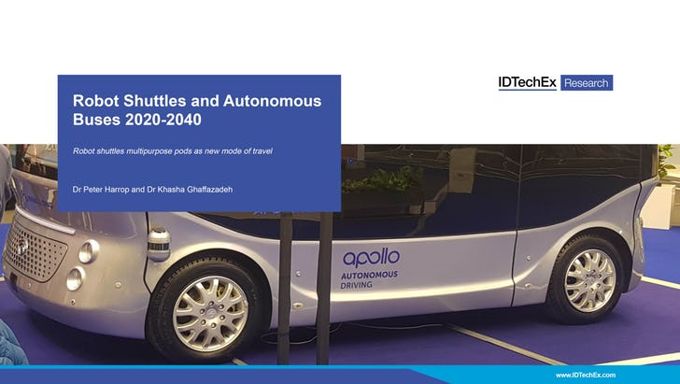
Consistent with this, in its new report Robot Shuttles and Autonomous Buses 2020-2040, IDTechEx finds that robot shuttle sales will take off around 2030 as a new form of transport.
Symmetrical, they never do u-turns and some will be allowed over piazzas and in shopping malls, even doubling as last mile goods transport.
With 37 projects worldwide, they are already the basis of the smart city Toyota is building at the foot of Mount Fuji.
Kantar finds that, across the 31 cities surveyed, a massive 36.7 million city-dwellers will change the way they travel over the next 10 years.
IDTechEx sees huge materials and components opportunities in this, the subject of its conference Electric Vehicle Materials 2020 and parallel conferences in Berlin on May 13-14.

Join the conversation