
Solar sets the scene
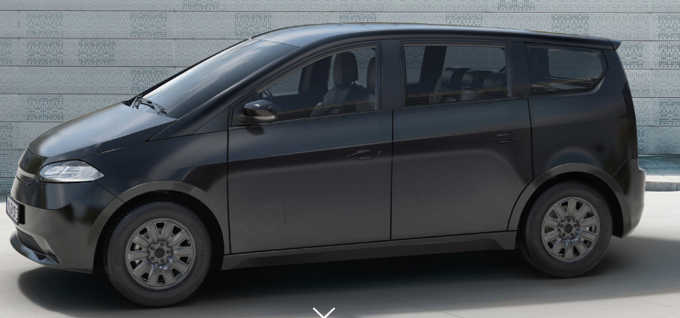
Start-ups Sono Motors and Lightyear have announced solar family cars available next year with solar bodies rather than the solar roof seen on other cars.
That means many owners will never plug in, IDTechEx chairman Dr Peter Harrop says.
“The major car companies should be ashamed of those two start-ups taking well over US$200 million of their business within one year with these attractive propositions.
“True, Hyundai is now on the job, announcing three large solar roof designs, one for pure electric cars, one for hybrids, another promised to be semi-transparent when available,” Harrop says.
“None will make a Hyundai energy independent for anyone. Nonetheless, some Hyundai users will get over 10% of their electricity from daylight, given typical distances driven.”
Toyota, Hanergy and others are experimenting with more expensive, even more efficient chemistry giving at least one kilowatt per kilogram.
Tesla has joined the solar party with an option on its Cybertruck. “There will be an option to add solar power that generates 15 miles per day, possibly more,” Tesla chief executive officer Elon Musk says. “Would love this to be self-powered. Adding fold out solar wings would generate 30 to 40 miles per day. Average miles per day in US is 30.”
Musk had previously discussed the idea of a “deployable solar shield like a retractable hard top” for EVs.
That feature could particularly be useful with the Cybertruck camper configuration that Tesla is planning to offer as an option, Harrop says.
“The chemistry was not revealed but we expect it to be the now mainstream single crystal silicon.”
The Chinese plan to make the more efficient single crystal silicon more popular even than today’s workhorse polycrystalline silicon on a house near you by massive new capacity leading to robust cost reduction.
Much more efficient means you get more electricity, or you need less area.
“We expect Tesla to charge a few thousand dollars for the huge solar top, very attractive to those buying the $50k plus premium versions of the pickup,” Harrop says.
“Another tens of thousands a year sale of solar cars should result.”
The recent announcement of the Squad City Solar car reveals a 45km/h, two-person solar car for daily (sub)urban mobility being developed by two ex-Lightyear employees who share a desire to develop an affordable solar car for a large group of consumers.
The Squad is available for pre-order in the European Union. Retail price starts at 5750 euros, so it is very affordable, as is the five-seat Sono Sion solar car, IDTechEx says. An 80km/h Squad will also be offered later. The Squad offers space for two passengers sitting side by side, and a storage compartment in the back. Two children (up to 1.25m) can sit on rear seats where legally permitted.
“We are clearly at the tipping point for adoption of solar on land, water and air vehicles, particularly on pure electric ones where range sells,” IDTechEx analysts chief executive officer Raghu Das says.
”There are now camper vans, delivery trucks, robot shuttles, buses, boats and even aircraft getting at least 10% and often all of their electricity from daylight. Many find it useful even on the sides of their vehicles. Any designer of any electric vehicle must now seriously consider solar bodywork. It is a new key enabling technology.”
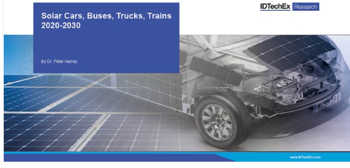
Check out Solar Cars, Buses, Trucks, Trains 2020-2030
for more information.

Join the conversation