
Steep improvements to Auckland air quality – NIWA
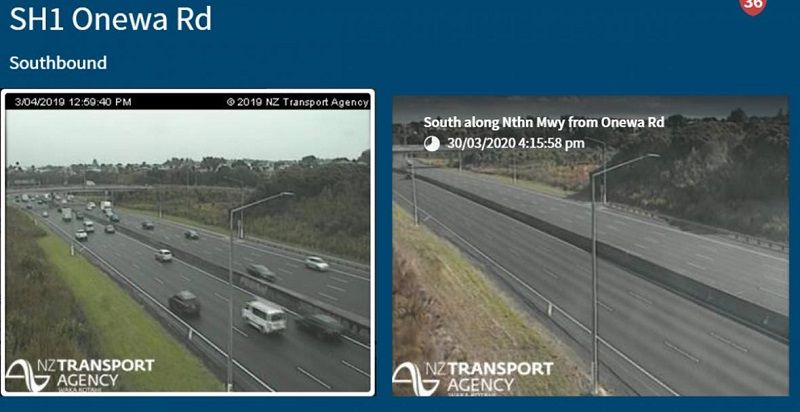
The COVID-19 pandemic may have some benefits – Auckland’s air quality has dramatically improved since the lockdown.
In less than a week, a steep drop in nitrogen oxide has occurred, particularly in suburban Auckland, NIWA scientists say.
Such vehicle exhaust pollutants exacerbate asthma and are linked to numerous health impacts, NIWA air quality scientist Dr Ian Longley says.

Dr Ian Longley
“At the Takapuna monitoring site, close to the Northern Motorway, nitrogen oxide levels at the end of last week were about a third lower than that normally seen during the morning rush hour,” he says.
“For the remaining daylight hours they were reduced by up to 80%.”
Longley says large fluctuations in air quality can occur between one day and the next due to changes in the weather, with quality generally worse in winter and better in summer.
“This means it can be misleading to compare today’s air quality to yesterday’s or a few months ago.”
To account for this, Longley has compared hourly data to average air quality in the last fortnight of March for the previous five years.
“In Henderson and Glen Eden, monitors reported nitrogen oxides falling effectively to zero on Thursday and Friday afternoons,” he says.
“On Queen Street, historically one of the most polluted locations in the country for traffic pollutants, the improvement was smaller but still dramatic with nitrogen oxide falling to half its usual level through most of Thursday.”
Longley says reductions in levels of airborne particulate matter have been more modest – for example a 20% drop in fine particles (PM2.5) at Takapuna during daylight hours. This probably reflects that a significant proportion of particles in Auckland’s air come from natural sources, especially sea salt.
“Whether these reductions in air pollution are entirely due to the lockdown or are merely reflecting fluctuations in the weather is not yet clear, but will become more obvious over the next couple of weeks.”
Routine automated air quality monitoring is done by regional councils.
Longley intends studying data for Wellington and Christchurch shortly.
Meanwhile, any reduction in greenhouse gas emissions will take longer to register.
NIWA researchers monitoring emissions such as carbon dioxide at Baring Head near Wellington say while they expect to see a decrease in observed CO2 levels, most of those changes will be in the northern hemisphere where emissions are concentrated.



Join the conversation