
Video: A Kiwi first – direct grid-connected battery
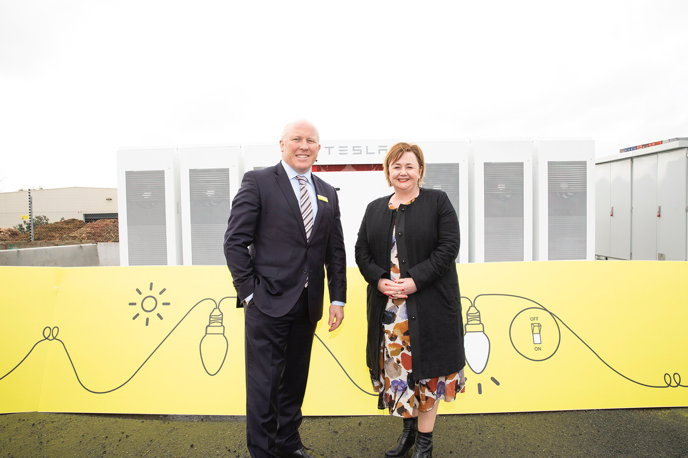
New Zealand’s first grid-scale battery storage facility was launched in Auckland by the energy minister Dr Megan Woods on August 22.
Tesla’s Powerpack battery commissioned by Mercury at their South Auckland research and development centre is part of an ambitious project to test the direct integration of battery energy storage with New Zealand’s electricity grid.
The energy company will also gather information around trading energy storage, and the relationship of stored electricity to the renewable hydro and geothermal electricity sources in its generation portfolio.
“Battery storage is a fast-developing technology with potential to support our country’s existing globally-envied renewable electricity supply,” Mercury chief executive Fraser Whineray says.
“Mercury’s mission is energy freedom for New Zealand and everyone who lives here, and this means offering new ways that sustainable energy is provided. Advances in battery technology are also fundamental to electrification of cars and trucks; they’re all part of the same energy ecosystem.”
Mercury has invested nearly $3 million in this project, to learn more about how battery storage can more efficiently and flexibly use current generation capability to meet consumer’s demand peaks.
The battery’s location next door to the national grid’s ‘main highway’ in to Auckland means trial information will ultimately contribute to security of supply for Auckland homes and businesses.
“We are really pleased to have worked with Mercury to enable this innovative project to operate on the grid,” Transpower operations general manager John Clarke says.
“We see battery storage as playing an increasingly important role in providing a reliable supply of electricity in New Zealand, as we increase our reliance on wind and solar to generate our electricity.”
As battery solutions evolve, making larger scale storage economic, this technology could effectively smooth demand for the electricity that powers New Zealand, leading to reduced reliance on non-renewable generation to support times of high demand.

Join the conversation