
World-first plug and charge technology – Tritium
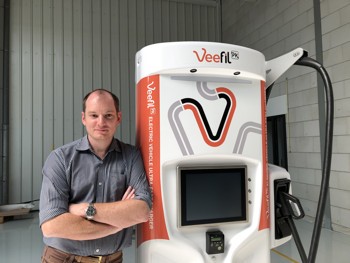 Brisbane-based EV charging tech company Tritium has launched its “game-changing Plug and Charge” solution, hailed as the first of its kind in the world to the market.
The technology securely, automatically and simultaneously charges both the battery and the driver’s account the moment a Tritium charger connects to an EV.
It leverages the ISO15118 standard, enabling an EV and charger to communicate seamlessly and authorise payments directly from the driver’s account, without the need for a card or RFID tag.
In other words, you plug it in and everything is taken care of, the tech available immediately for Tritium’s PK350kW DC high power chargers.
Tested with existing and emerging EVs from OEMs in Europe, the ‘Plug and Charge’ system has proven to be secure and easy to use, and to reduce the stress of charging particularly across borders, Tritium says.
Drivers will be able to use a charger regardless of the charging network operator, and their charge session will be automatically and securely billed immediately.
“This firmly and irreversibly tips the convenience scales to the recharging experience over the refuelling experience,” Tritium chief technology officer and co-founder James Kennedy says.
“It’s going to be as simple as how we charge our phones, but with the added benefit of charging our bank accounts at the same time.”
Kennedy says the Tritium Plug and Charge solution is more secure than the former card-swipe or RFID tag payment method.
“A third party, such as Hubject – which provides an automated and secure data exchange enabled by ISO 15118-conforming Public Key Infrastructure – is responsible for cryptographic certifications between the vehicle and the charger, and our technology ensures we are securely storing cryptographic keys on the charger side in a way that other chargers can’t.
“You’re more likely to lose a card and have someone swipe it somewhere than by someone being able to access account details via our Plug and Charge technology.”
What is required for the technology to hit the critical mass required is buy-in and adoption on a large scale from charge point operators, Kennedy says.
EVs will also need a way to secure the vehicle-side cryptographic key which will become common place with emerging models.
“The vehicles will need to have the storage technology built in, in much the same way as paying for something with your smartphone requires NFC technology,” Kennedy says.
“Once that becomes the norm, as NFC has, you will see the incidents of Plug and Charge payments skyrocket.”

Join the conversation