
EV kick start needed
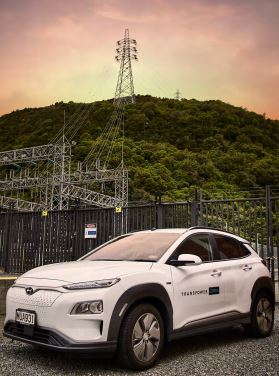
New Zealand could save billions of dollars by switching to EVs.
So says Transpower in its newly published A Roadmap for Electrification which studies actions that could accelerate the electrification of New Zealand’s transport and process heat sectors to reduce emissions while delivering significant economic benefits.
A kick start is needed, Transpower chief executive Alison Andrew says.
“The difference between a kick-start and sustained economic support for decarbonising is very important. For EVs in particular, a kick-start is needed to support mass adoption now, but with continually improving economics, policy initiatives such as feebates, tax treatments and road user charge exemptions can be rapidly wound back as the market matures.”
Andrew says policies are needed urgently to achieve the outcomes required.
“Each year of delay in electrifying transport will increase New Zealand’s cumulative emissions and transport costs by 1% and $1 billion respectively through to 2050,” she says.
“It’s clear that emissions from transport and process heat must be tackled and that we now have the economic and technical means to do so.
“It is now equally clear that we also have the policy options to get the job done and that the economic benefits can significantly outweigh the costs of doing so.”
The report finds that electrification and increased renewable generation can reduce New Zealand’s annual emissions by around 4.7Mt CO2-e while generating annual net benefits to the economy of around $500 million from 2030, building to around 9.6 Mt CO2-e and $1.4 billion a year by 2035.
In transport where the largest gains are to be made, the total cost of ownership is already lower for many electric vehicles.
By 2025 it is forecast to be lower for nearly all electric options.
Current high up-front costs are the largest barrier to EV uptake with purchase price parity not expected until the middle of the decade delaying mass adoption until 2030.
The opportunity for New Zealand is, through policy and market settings, to incentivise mass EV uptake now and bring forward mass EV adoption by five years, to around 2025, the report suggests.
In addition to the Clean Car Import Standard, policy options to achieve this include purchase incentives like a feebate, setting a sunset date for the import of petrol and diesel vehicles, investing in charging infrastructure and introducing smart electricity system integration standards.
“Not only are we confident that the electricity sector is capable of meeting increased demand, done in the right way, accelerated electrification has the potential to deliver a more affordable, secure and flexible system compared to business as usual,” Andrew says.
“And when we looked at the policy options, and subtracted the costs from the benefits of electrification, we found that, across the economy, we have the opportunity to be hundreds of millions of dollars better off by 2030, and for that to grow from then on.”
The report suggests an EV’s charge up could cost the equivalent of about 40 cents a litre in fuel.
Transpower’s report follows the Climate Change Commission’s draft advice which suggests banning light internal combustion vehicle imports in 2032.


Join the conversation