
Europe’s e-motorcycle market accelerates
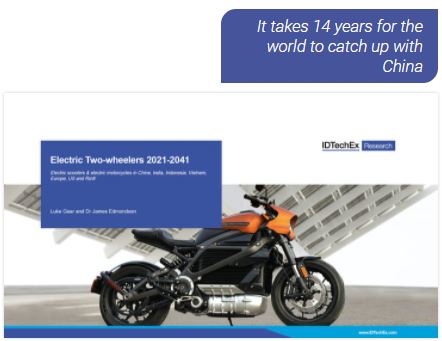
Europe’s electric motorcycle market is expected to grow at least 50% year-on-year through the 2020s.
That’s according to IDTechEx which says the e-motorcycle surge mirrors EVs.
This is driven by continued policy support from governments alongside start-ups and incumbent OEMs entering the market with new model releases, its report Electric Two-wheelers 2021–2041 says.
Growth is also being boosted by consumer awareness and acceptance in Europe of the benefits of electric motorcycles, the report adds.
“Besides the low cost of ownership, electric motorcycles improve the riding experience, taking away the noise, fumes, vibration, shifting, and clutching from the user experience, alongside the environmental benefits of low emissions. The result has been strong growth on par with the electric car market since 2017.”
Electric motorcycles are unique, serious machines with power and energy requirements orders of magnitude higher than other common types of electric two-wheelers such as electric scooters, both the standing kind (ie Lime) and the sitting kind (ie Vespa).
Indeed, electric motorcycles typically utilise electric motors beyond 40kWp, which is more comparable to those found in electric cars than electric scooters, in a much more restricted space, IDTechEx says.
“This high-power need, coupled with the limited space on the motorcycle, means manufacturers rarely use off-the-shelf parts and design motors in-house from scratch.
“The situation is the same for the battery packs, which actually take up the most space in boxy designs unconventional for the moto industry (even when utilising high-energy automotive-grade li-ion cells). In contrast, low energy, cheap LFP packs sourced from China can be used for the low energy needs of electric scooters.”
California-based Zero Motorcycles is a good example, IDTechEx explains.
“It uses locally sourced NMC pouch cells in a custom pack and has an impressive custom-built permanent magnet AC motor (passively air-cooled). The motor has no transmission and is direct drive to the rear wheel, with instant torque.”
The result is that electric motorcycles are expensive compared with equivalent combustion models, and start-ups often focus on developing competition or racing bikes, which are less price-sensitive markets, IDTechEx adds.
“So, while the market is growing, the price remains the main hurdle – a motorcycle with a 14kWh battery pack sells for over US$15,000 today.
“The issue is exacerbated by the fact that electric motorcycles have the most appeal to environmentally conscious millennials who tend to have less purchasing power than older generations preferring loud pipes. In fact, young people are less inclined to buy a motorcycle in general, which is an existential problem the overall industry is grappling with.”
The high price of electric motorcycles should naturally improve as battery costs continue to decline from the economies of scale of the automotive industry, which may be enough to entice a new, younger audience, IDTechEx believes.
Join the conversation