
Tritium gets funding to improve high-powered charging
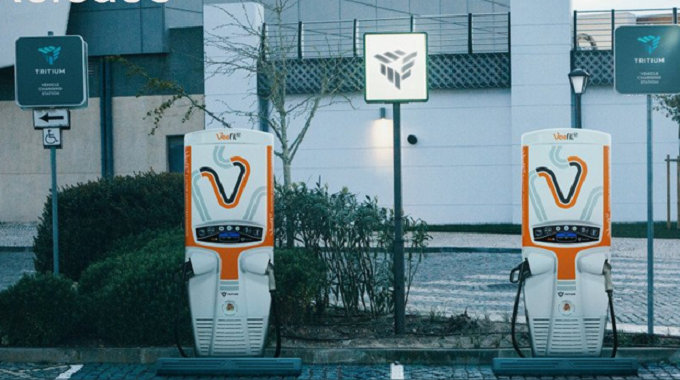
A US$400,000 allocation will allow Brisbane-based electric vehicle charging solutions company Tritium to develop a smaller, more efficient and cheaper to buy high-powered charger.
Tritium will develop a custom version of its Veefil-PK charger while also providing input for system design and testing through its part of a US$3.2 million in federal funding awarded to the Electric Power Research Institute (EPRI) for developing an extreme fast charging system that can connect to the grid.
“This project lets us use our expertise in EV charging to build an advanced system that is easy to scale, repeat and manufacture,” Tritium’s engineering director and co-founder James Kennedy says. “The solution the project team develops will result in a system with a smaller footprint, higher efficiency and lower cost of ownership.
“The project will help us gain exposure to the rapidly developing US market.”

Tritium is one of several companies partnering with EPRI to develop a system for plug-in electric vehicle (PEV) high-powered charging with a DC connection to the medium-voltage grid.
The system will reduce the impact on the grid while providing the ability to charge multiple EVs quickly at “extreme” levels while providing physical and cybersecurity protection for the infrastructure.
“Electrification of transportation presents opportunities for massive decarbonisation, increased productivity and customer satisfaction,” EPRI integrated grid vice-president Mark McGranaghan says.
“Our collaborative team will dig deeper into options for faster, flexible and more efficient vehicle charging, which could be key to maximizing the impact and acceleration of electrifying fleets of vehicles.”
EPRI’s funding is part of US$80m in US Department of Energy (DOE) funding distributed among 42 projects for early-stage research in advanced vehicle technologies that give drivers more choices to affordably meet their mobility needs, strengthen US energy security, reduce dependence on foreign materials and enhance the economy.
The DOE’s investment in battery and electrification research has several objectives, including creating cathode materials for EV batteries that do not require cobalt, providing data on the impact of mobility services and maximising fuel economy.

Join the conversation