
ABB opens global e-mobility R&D centre
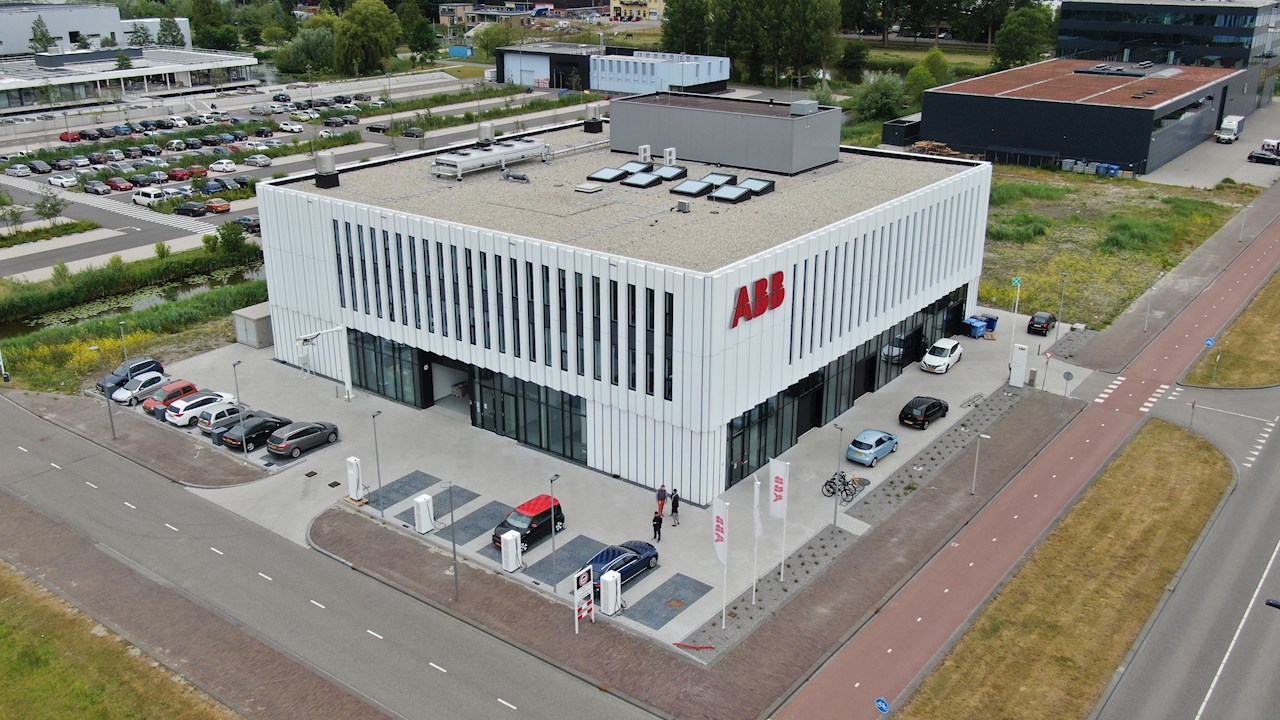
ABB’s US$10 million E-mobility Innovation Lab has opened in the Netherlands, underlining its market leading position in EV charging infrastructure.
The 3600 square metre facility on the Delft University of Technology campus accommodates 120 specialists and will drive ABB’s future portfolio development, as well as R&D projects for EVs.
About US$30m has also been invested in a global Centre of Excellence and production site for EV charging infrastructure, due to open this year in Italy.
“Innovation is in our blood – ABB has led the way in EV charging and is proud to have played a key role in driving adoption rates of electric vehicles across the world,” ABB E-mobility Infrastructure Solutions global business head Frank Muehlon says.
“That is why we wanted to locate our E-mobility Innovation Lab in Delft, in the heart of the university campus, where we are surrounded by the brightest tech talents and start-ups in the Netherlands.”
Coincidentally, students who founded Epyon (the EV charging start-up acquired by ABB in 2011) were from Delft.
“Within ABB Electrification, we invest about US$400m per annum into R&D to ensure we remain at the forefront of technological leadership and set the standard when it comes to sustainable mobility,” Muehlon says.
“As part of this investment, we are focused on pushing the boundaries of e-mobility, predominantly in the areas of charging, storage and digitalisation.
“The new lab will allow us to strengthen our collaboration with EV manufacturers to drive further performance and progress across the sector.”
A key focus for ABB is ensuring the seamless connection between vehicles, charging stations, charging networks, and the grid, together with supporting software systems.
The lab has been fitted with the latest technology to ensure that ABB chargers are compatible with all types of vehicles.
To test how vehicles perform in very hot or cold weather, ABB has developed special environmental testing rooms with temperatures from minus 40 to more than 100 degrees Celsius and high humidity.
The atrium is large enough for manufacturers to drive their cars, buses or trucks into to conduct testing, which will help advance charging for the rapidly growing electric heavy vehicle segment.
To minimise its environmental impact, the complex is connected to the Delft University of Technology geothermal heating/cooling plant.
The roof has solar panels, which together with ABB’s advanced building management system for climate and light control and battery storage system, will allow testing energy to be fed back into the grid.
Late last year, ABB announced it will increase R&D and digital spend to about 5% of revenues per year, focusing on high-growth segments including e-mobility.
ABB has around 7000 employees in R&D and, after entering the EV charging market in 2010, has sold more than 17,000 ABB DC fast chargers across 80 countries.
Its commitment to driving e-mobility is shown through the ABB FIA Formula E World Championship, starting its fourth season with a Diriyah double-header under lights on February 26 and 27 as Saudi Arabia hosts the first all-electric night races.
The championship includes Kiwi driver Mitch Evans and Briton Sam Bird in the Jaguar Racing team in the new Jaguar I-Type 5 cars.
In recent news, McLaren Racing has the option to enter the championship as one of a maximum 12 entries for the 2022/2023 season when ABB will become the official charging supplier to the championship.
Join the conversation