
EV ‘hub’ tests in Japan
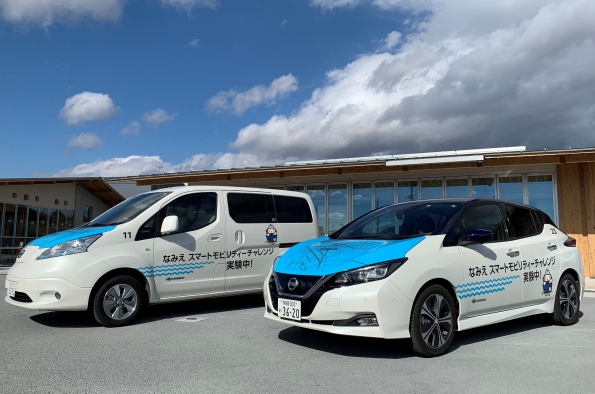
A high frequency EV shuttle service looping around the central district of Namie town uses roadside stations as mobility hubs – these connecting to other vehicles which serve as “spokes” and are used for travel to nearby areas.
That’s in a field test of new mobility services launched by Nissan in Japan in a partnership with three local governments and eight companies which aims to develop new modes of transportation and to promote renewable energy use in the Hamadori area of Fukushima Prefecture.
The overall goal is to help develop a revitalised, resilient and sustainable low-carbon community, the service supporting both passenger and cargo transport.
It includes home delivery of packages using “spoke” vehicles such as EV taxis and utilising Japan Post vehicles for efficient delivery, as well as roadside station pickup of purchases from supermarkets.
The tests also include running an autonomous vehicle (AV) on a route around central Namie.
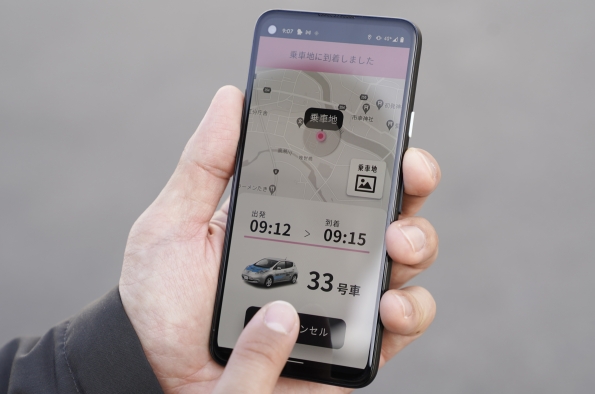
The long-term vision is to create sustainable transportation services that offer convenience and contribute to the economy.
Nissan’s involvement includes its global efforts to achieve carbon neutrality by 2050.
The field operation tests announced will assess receptiveness among residents and visitors.
To help create a sustainable, low-carbon community, the partnership initiative includes building an energy management system that uses EVs and stationary rechargeable batteries while enhancing renewable energy use at various facilities.
Participating companies plan to cooperate to make the community more resilient through using EVs to supply power at stores and other sites during disasters.
Nissan’s Blue Switch project promotes the use of EVs to address issues related to disaster prevention, energy management, climate change and population declines in Japan.
Overseas, Nissan has participated in research and the development of mobility services using automated driving technology in places such as London and China.


Join the conversation